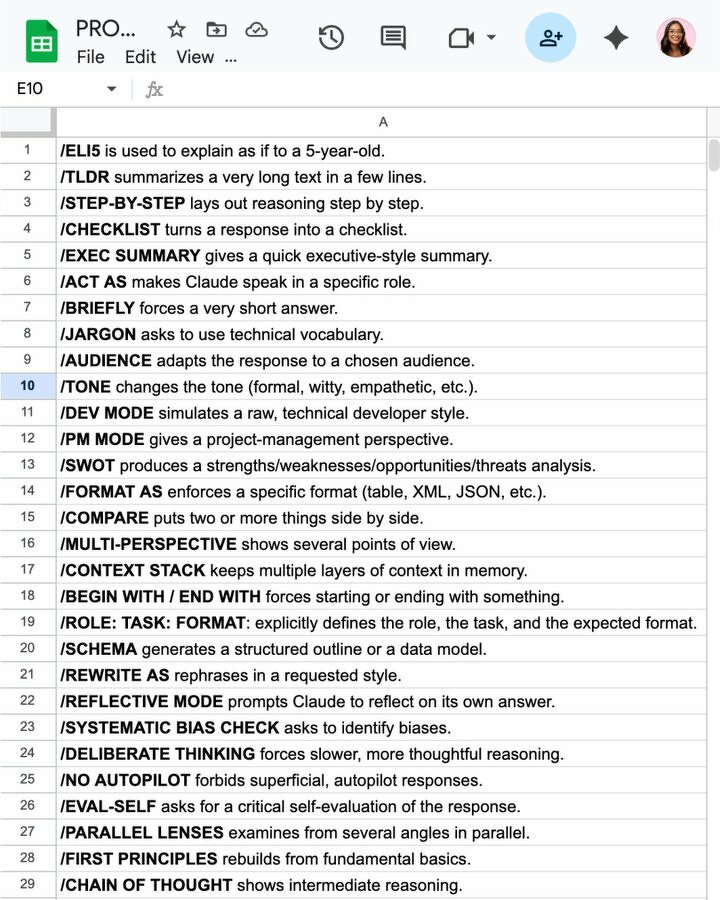
It’s important to have a regular routine and one that you can quickly cruise through. I do that with Claude by using keystrokes. As James Clear says, it can lead to a compounding effect.
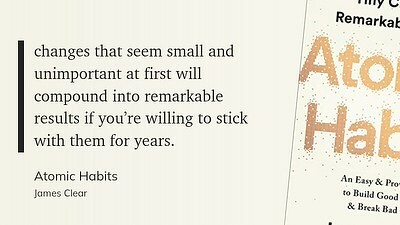
I converted these prompts to flash cards to help memorise Claude shortcuts I saw Ruben Hassid using.
/ELI5 is used to explain as if to a 5-year-old.
/TLDL summarizes a very long text in a few lines.
/STEP-BY-STEP lays out reasoning step by step.
/CHECKLIST turns a response into a checklist.
/EXEC SUMMARY gives a quick executive-style summary.
/ACT AS makes ChatGPT speak in a specific role.
/BRIEFLY forces a very short answer.
/JARGON asks to use technical vocabulary.
/AUDIENCE adapts the response to a chosen audience.
/TONE changes the tone (formal, funny, dramatic, etc.).
/DEV MODE simulates a raw, technical developer style.
/PM MODE gives a project-management perspective.
/SWOT produces a strengths/weaknesses/opportunities/threats analysis.
/FORMAT AS enforces a specific format (table, JSON, etc.).
/COMPARE puts two or more things side by side.
/MULTI-PERSPECTIVE shows several points of view.
/CONTEXT STACK keeps multiple layers of context in memory.
/BEGIN WITH / END WITH forces starting or ending with something.
/ROLE: TASK: FORMAT: explicitly defines the role, the task, and the expected format.
/SCHEMA generates a structured outline or a data model.
/REWRITE AS: rephrases in a requested style.
/REFLECTIVE MODE prompts the AI to reflect on its own answer.
/SYSTEMATIC BIAS CHECK asks to identify biases.
/DELIBERATE THINKING forces slower, more thoughtful reasoning.
/NO AUTOPILOT forbids superficial, autopilot responses.
/EVAL-SELF asks for a critical self-evaluation of the response.
/PARALLEL LENSES examines from several angles in parallel.
/FIRST PRINCIPLES rebuilds from fundamental basics.
/CHAIN OF THOUGHT shows intermediate reasoning.
/PITFALLS identifies possible traps and errors.
/METRICS MODE expresses answers with measures and indicators.
/GUARDRAIL sets strict boundaries not to cross.