12 Talking Points from Regime Change
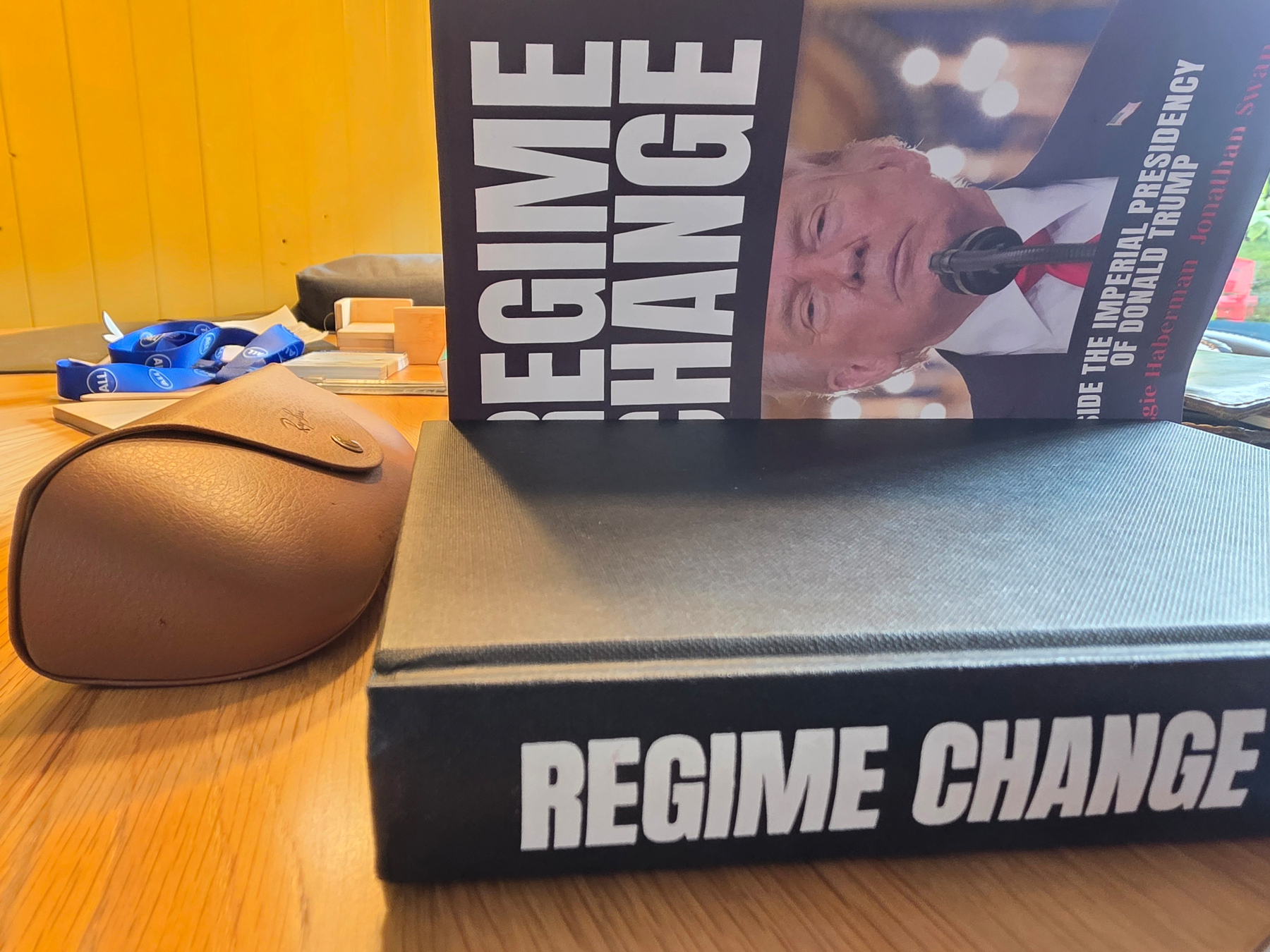
I am on TippFM today, bringing 12 Talking Points from the book Regime Change.
1. DOGE's power peaked, then vanished from the story.
The book pinpoints February 2025 as “the peak of Musk’s power in the new Trump administration, power with little precedent in the country’s history” — a favor that had evaporated within a year (Haberman and Swan, 2026).
2. DOGE's cuts had real casualties abroad.
USAID’s collapse under DOGE budget-cutting nearly caused the Al Hol detention camp in Syria to fail entirely, risking a mass escape of ISIS fighters — what the authors call “one example of the unintended consequences of the DOGE approach to budget cutting” (Haberman and Swan, 2026).
3. Boat strikes as declared policy of killing, not arrest.
On suspected drug traffickers: “I don’t think we’re going to necessarily ask for a declaration of war… I think we are just going to kill people that are bringing drugs into our country… They are going to be, like, dead” (Haberman and Swan, 2026).
4. A Caribbean buildup and a foreign raid that blurred war and law enforcement.
By November 2025 the U.S. had a bigger military presence in the Caribbean “than at any time since the Cuban Missile Crisis of 1962,” culminating in a ground raid into Venezuela that killed roughly 80 people and removed Maduro (Haberman and Swan, 2026).
5. ICE detention surged past any prior baseline.
People with no criminal record held in ICE custody rose “by more than 2,500 percent” by November 2025; nearly 70 percent of detainees had never been convicted of a crime, and at least 31 people died in detention that year (Haberman and Swan, 2026).
6. Federal culture policy policed for "improper ideology."
The book describes the Smithsonian and federally funded institutions placed under scrutiny for an “amorphous” new aesthetic standard “dependent on the whims of one man” (Haberman and Swan, 2026).
7. AI policy shaped by a personal alliance, not safety review.
A “mind meld” between Trump and Nvidia’s Jensen Huang sidelined AI-safety voices in favor of unfettered growth, with allies like David Sacks comparing it to Kennedy’s space program (Haberman and Swan, 2026).
8. The Epstein files triggered Situation Room-level panic.
Top aides held classified damage-control meetings over leak fears, and Vance floated having Tucker Carlson interview Ghislaine Maxwell in prison in hopes she’d publicly clear Trump — while Trump himself wanted the matter “buried” and “was snapping at anyone who mentioned it” (Haberman and Swan, 2026, as excerpted in Allen, 2026).
9. The authors' verdict on Epstein's limits.
“The president could break institutions, redirect the federal government against his enemies and bring the world’s richest men into the Oval Office bearing tribute. But he could not, it turned out, make Jeffrey Epstein disappear” (Haberman and Swan, 2026, quoted in Allen, 2026).
10. Congress functionally absorbed into the executive.
The book reports that power “flowed out of the Speaker’s office directly into the Oval Office,” with Trump combining personal access — cell-phone numbers, golf outings, Mar-a-Lago dinners, jet rides — with primary-challenge threats to keep members compliant (Haberman and Swan, 2026, quoted in Danner, 2026).
11. Corporate money bankrolled the operation at unprecedented scale.
Fortune 500 CEOs began calling within a day of the 2024 election; Trump personally “dictate[d] the number — the exact dollar figure” fundraisers should extract from each one, ultimately pulling in roughly $1.9 billion in corporate donations (Haberman and Swan, 2026, quoted in Danner, 2026).
12. "Liberation Day" was chaos behind the scenes, and Trump backed down when markets punished him.
Trump rejected his own Commerce Secretary’s tariff figures as “bullshit numbers” while improvising rates “sometimes by the hour”; the rollout wiped $2 trillion off the S&P 500 in a day, and — despite aides calling it a “genius negotiating strategy” — the authors write plainly that “Trump had blinked” (Haberman and Swan, 2026, quoted in Danner, 2026).