First thoughts about AI Winter

I use my lens of “AI Winter” when reading vendor reports concerning the reach and capabilities of artificial intelligence. In my opinion, an abrupt “AI Winter” will occur by 2029, with reduced access to AI that will be driven by economic downturn and vendor failures. When this happens, three major vulnerabilities unfold in the education and training spaces I occupied since Y2K.
Stranded investment and reversed operational gains
Look around and you can see the deep, vendor-specific commitments educational institutions have made to equip their organisations with AI services. In a Microsoft report cited below (Microsoft, 2026, pp. 3, 20), Broward County deployed 20,000 Microsoft 365 Copilot licenses and reclaimed 6–7 staff hours weekly, projecting $40–50 million in facilities savings over five years; the University of Kentucky extended Copilot access to over 70,000 students and staff through its CATS AI governance framework; and UC Chile built 194 bespoke AI tutoring agents.
If a tech support service provider collapsed or licensing became unaffordable, these efficiency gains would reverse abruptly. If I still worked as a university lectuter, I would feel the effect of administrative workloads snapping back since I would no longer be able to reclaim time that I had restructured around AI. And major issues would emerge with the failure of governance frameworks built around specific tools. Compliance audits would consume more time than spent for grant applications.
A widening AI literacy and equity gap
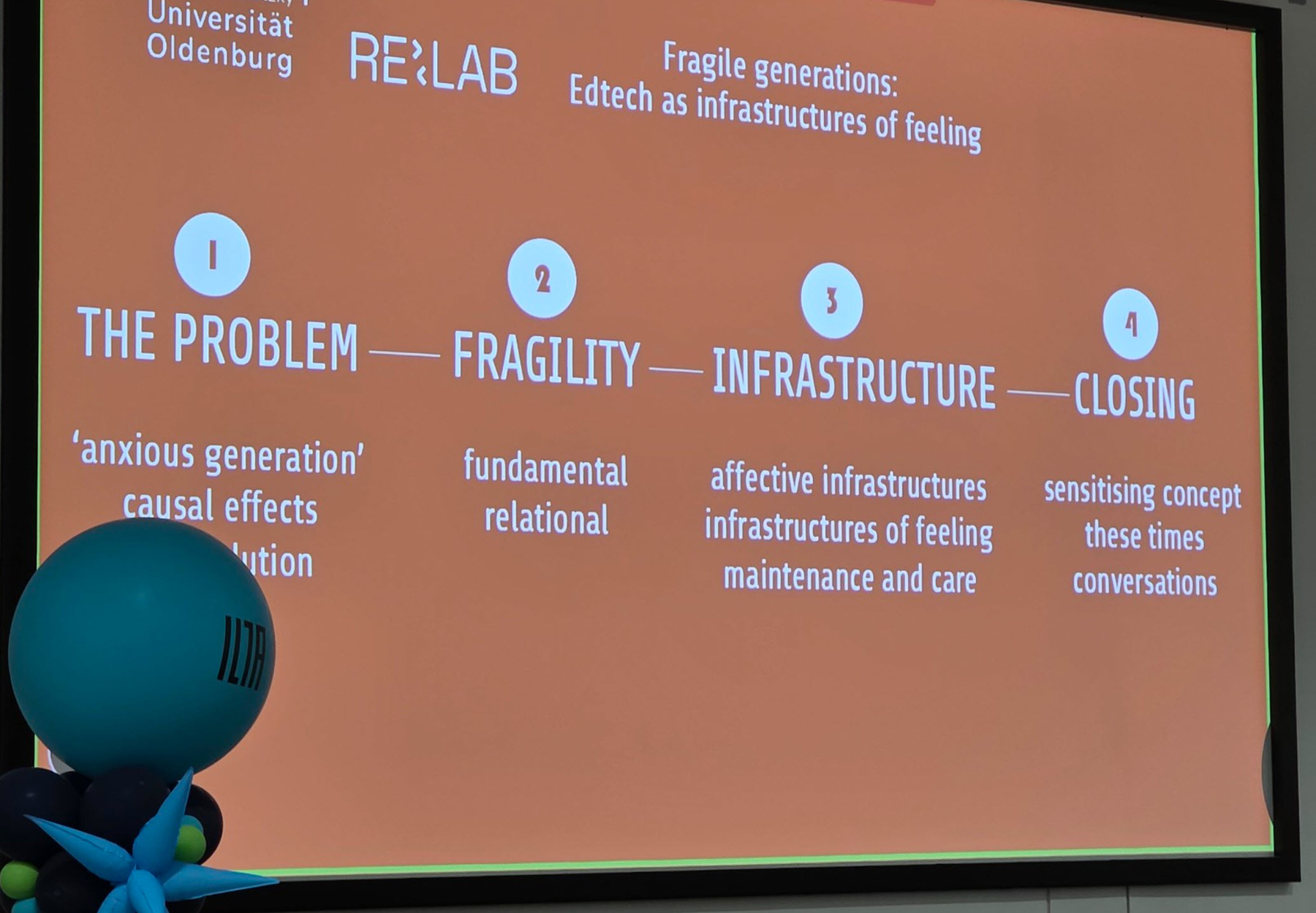
Training is already thin and unevenly distributed. During two education conferences I’ve attended (EDULEARN in Spain and EDTECH in Ireland) 77% of students and 53% of educators report no formal AI training. In a Microsoft report, only about half of leaders' claims of “clear guidance” are corroborated by the students and teachers meant to receive it (Microsoft, 2026, p. 17).
We know that downturns cut access disproportionately for under-resourced schools (versus well-funded institutions that can absorb higher costs). An AI Winter widens this gap further as I have read from LinkedIn research. Placement officers have said that 70% of job skills will change by 2030 and they have documented that AI-literacy job listings rose sixfold in a single year (Dewar, 2025, cited in Microsoft, 2026, p. 23).
A workforce-readiness mismatch
The sharpest graduates arrive on the job with “agent boss” capabilities. They can direct, evaluate, and correcting AI output (often in mid-query). They don’t required traditional on-the-job learning (Spataro, cited in Microsoft, 2026, p. 24). If students lose consistent AI access in the middle of their degree work, they would enter a labour market that has already moved on without them, arriving without the quality-control and critical-thinking skills the 2026 Work Trend Index identifies as newly essential (50% and 46% of surveyed workers respectively) (Microsoft, 2026, p. 25).
I wonder which higher education course developers are already factoring into their academic modules a world in which exuberance about AI has softened. I would like to compare notes with education professionals about the best way to mitigate the effects of a sudden access shock when our easy reliance on AI-powered workflows deserves an adjustment.
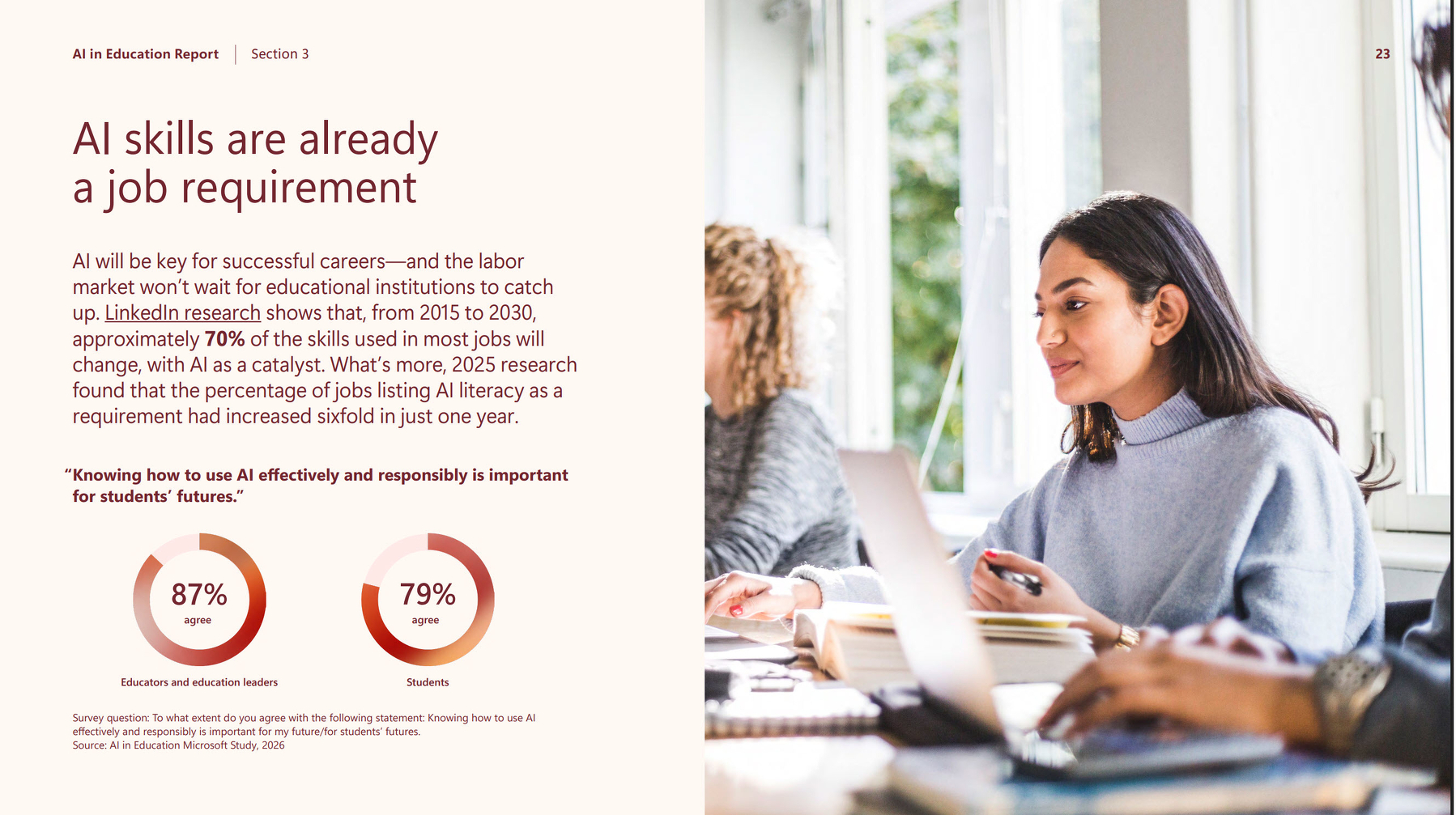
Main Reference: Microsoft (2026) AI in Education: A Microsoft Special Report. Redmond: Microsoft Corporation.
All photos are snapped by Bernie Goldbach and are in his Flickr photostreams.