Blowback with the lights on
People who know me often just look without understanding where I’m headed. I’ve seen reactions from bystanders when I train people to use complex technology. Back in the late 70s I remember senior managers watch me bring middle aged women from their Selectric typewriters into into the realm of word processing. Two decades ago, I’ve walked young university students who had rotary phones in their family homes into makeshift recording spaces where they used their mobile phones to make podcasts. Ten years ago I trained drone pilots to fly alongside kayaks on a river run. All those experiences were joyful, most without fanfare.

Along the way I have also encountered blowback to my technical skills. My first slapdown happened in 1980 when I was certified to as a C-141 aircraft commander with only 1200 hours of flying time. I had received an FAA waiver for completing a Lockheed flight simulator programme, logging up to three hours a day flying the sim through takeoffs, landings, emergency situations, and Cat II instrument procedures with weather below minimums. I passed my in-flight check ride on the first go and continued logging more than 1000 hours of instructor time as an air refueling instructor pilot.
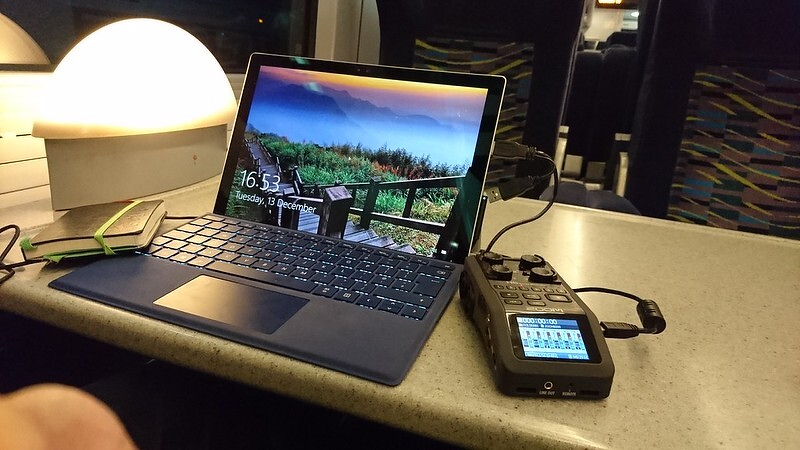
During the past three months, I’ve received major pushback from highly placed education professionals about how I combine critical thinking and creative media with artificial intelligence. I start with written notes, hand-drawn sketches, personal photography, and an outdated Windows laptop. I am castigated because that laptop runs paid subscriptions to three different AI services. It’s as though all my organic content, spoken through my voice or written with my hand, is corrupted by association with AI.
I don't accept that as a valid world view.
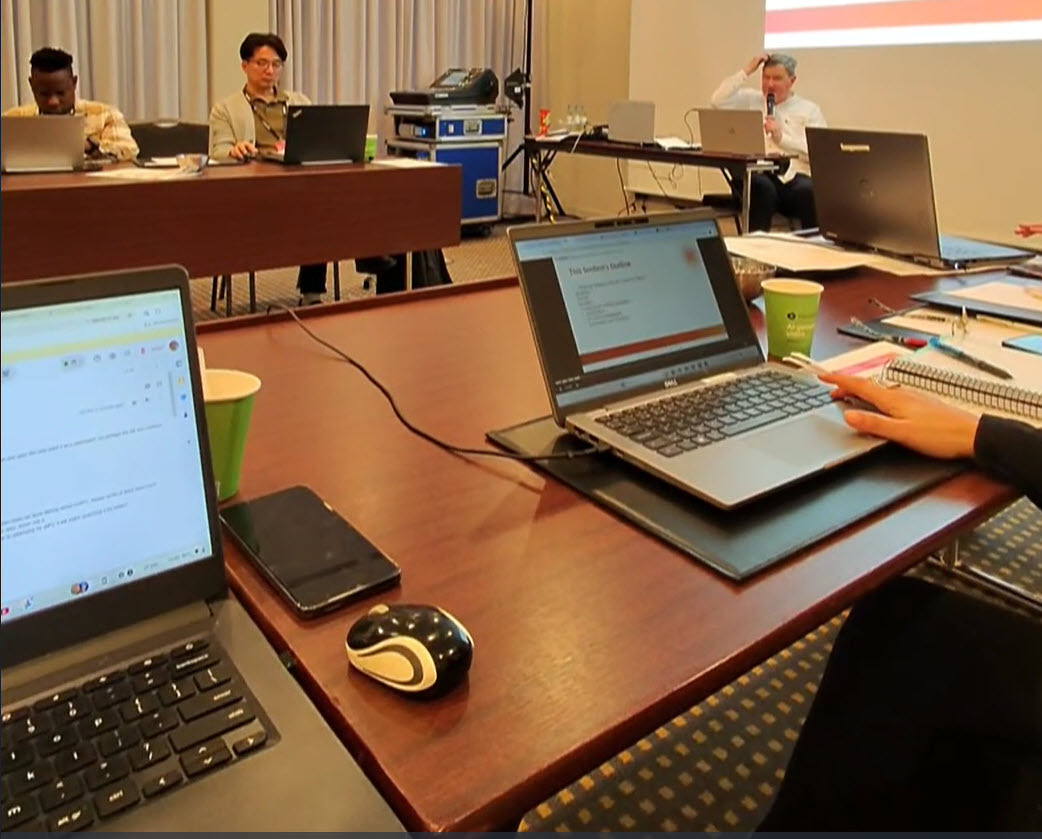
I feel castigated for having trained more than 1100 people from 15 countries in the ethical and sustainable use of artificial intelligence. Some of my colleagues at the TUS do not want to know details of how I set up shared and monitored access to ChatGPT, Copilot, and Perplexity accounts for fourth year students, Transition Year programmes, and Adult Literacy for Life training sessions. I can incite meltdowns when I pull two (2) operational Ray-Ban Meta glasses from my backpack.
This is a continuing adventure.
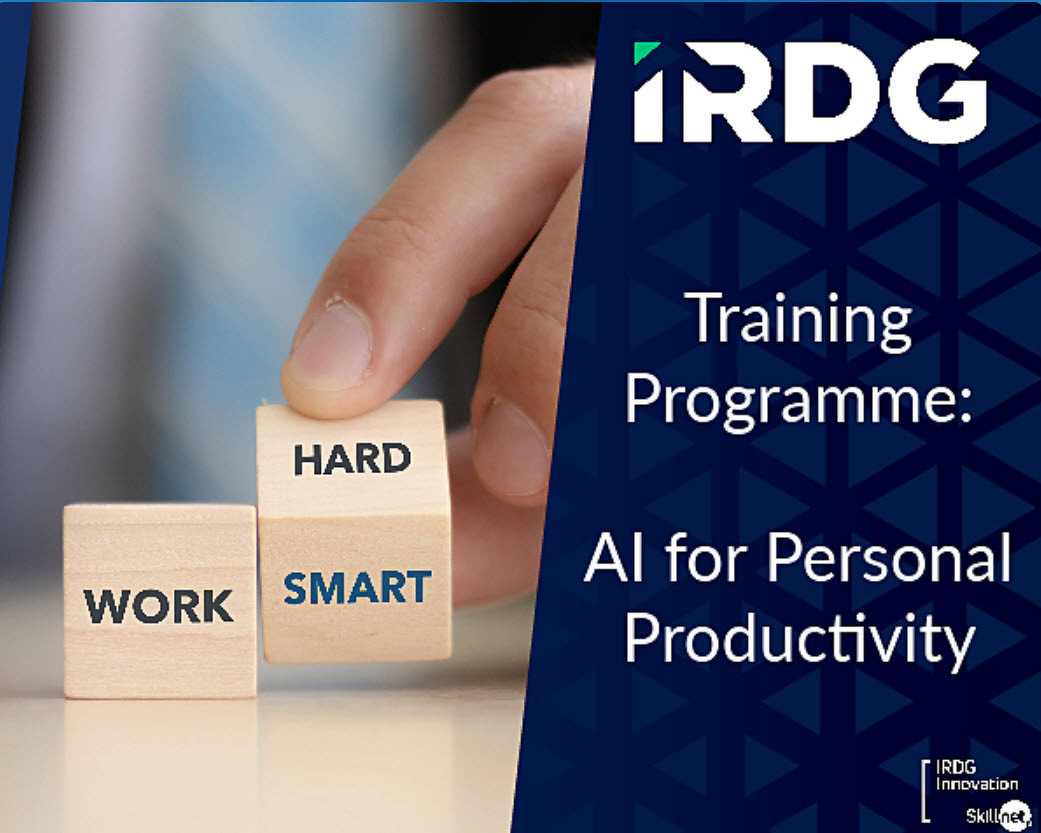
On the sixth of May 2026, I'm joining Larry Maguire to start our ninth cohort of "AI for Personal Productivity" with the IRDG Innovation Skillnet. We believe AI is a tool that enhances personal intelligence. We show frameworks grounded in personal knowledge management strategies. We reveal the harsh reality of job losses stemming from the rise of AI in the workplace. We show people how they can build a second brain with their own notebooks. Under the bonnet it means mastering processes that incorporate semantic relationships primarily built on vector embeddings and cosine similarity. But we just show how that works in Notion and in Obsidian.
Instead of using a large language model or a keyword search tool, the research and project notes that I keep in my Obsidian vaults are translated into mathematical vectors where meaning is represented by coordinates in a high-dimensional space. I have shown this to active learners such as Frances O’Donnell and Brigit Kolen.
Like Nick Milo says, you don’t need AI to link your thinking. I can create and edit offline. Some of the people who complete our 12 hours of online training like to see how I keep all my intellectual property on an air-gapped USB key. Most people want to proficiently use the AI tool that their company has put on their computers. So they complete 16 hands-on tasks and then continue on their path of lifelong learning.
I think I’m doing the right thing with my enthusiasm to use new tools. In late 1998, I told Paddy Coyne to watch out for this new search engine called Google. In early 2006, I showed students access to Facebook that I acquired through a US college. I recommended these creative multimedia students look at uploading their shorts to YouTube. By 2010, most of the traffic on my blog was coming from mobile phones. On my college campuses, those phones were being used more for Instagram and dating apps with most of the news coming from social media.
I started experimenting with ChatGPT-3 in 2023 and have watched AI being adopted faster than any other computer program or mobile app. It is being leveraged for the greater good such as with simulation and construction programmes that Ruth Maher and Tim O’Driscoll have created to restore vacant and derelict buildings. I believe AI has as great an impact on society as electrification had on my Irish and German ancestors in America in the 1890s. Back then, people feared the sound of the lights or the hum of the wires. So they just turned them off.
But unlike electricity, you can’t turn off AI.
(No AI was used to write these thoughts so I am responsible for all errors.)