Learning About People and Pages in Books
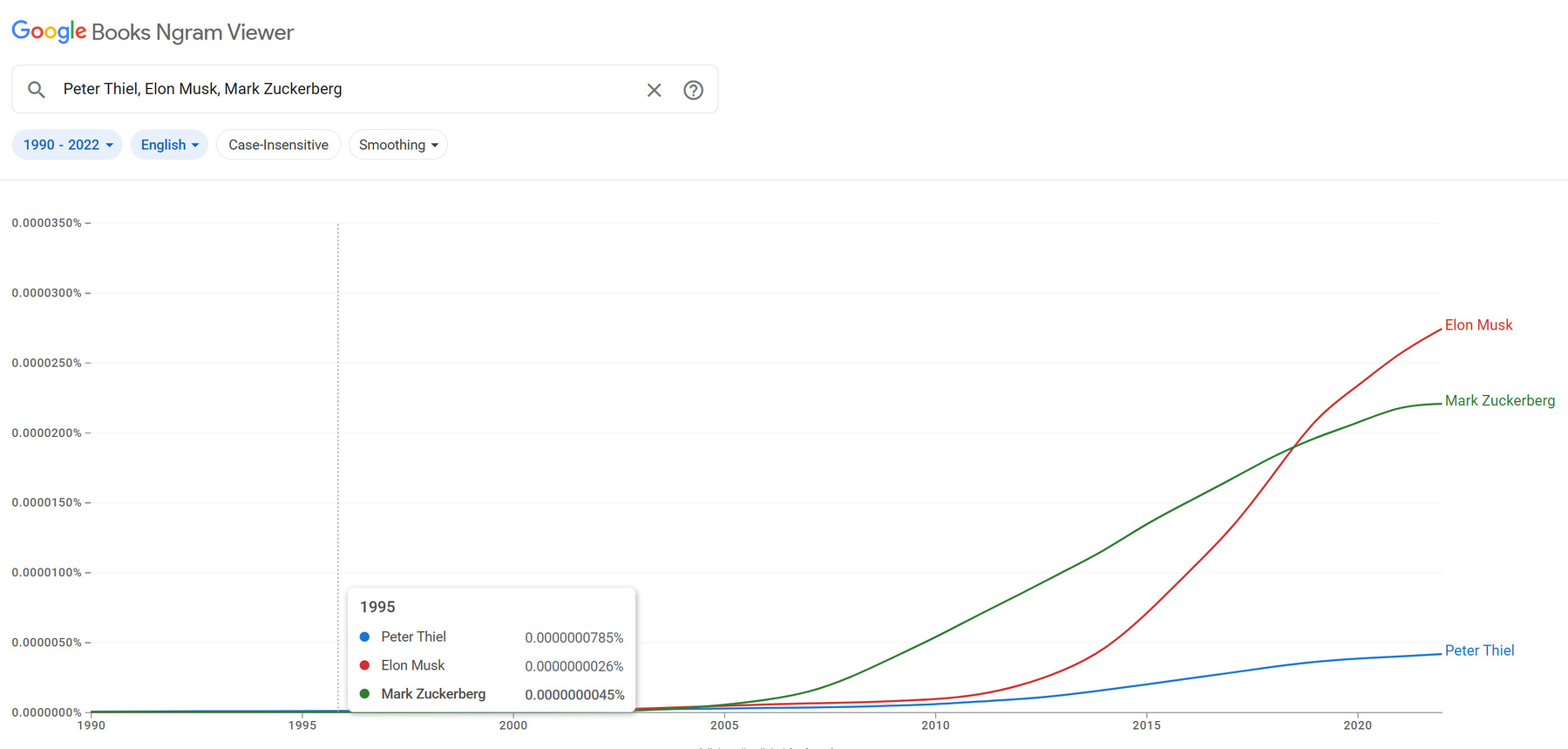
I occasionally use Google Ngram Viewer to show the frequency of occurrence, over time, of term(s) (words or phrases) enclosed within commas. I can use Ngrams to search the entire Google Books corpus of books captured via Google’s OCR. This isn’t a complete reach of all printed books because several books written in Dutch that I have aren’t captured by the Ngram Viewer.
Researchers should treat Ngram data as indicative of trends in a large but biased sample of print culture, not as a comprehensive record of all published material.
I like poking around with the Ngrams User Interface because when I use the buttons along the top of the screen (see below) I can find the links to the actual texts where the desired words appeared during the chosen time period. Clicking on a point in the Ngram graph surfaces links to the underlying texts where a given term appears during the selected time period, enabling researchers to move efficiently from quantitative pattern to primary source.
I Ngrammed Peter Thiel to confirm how effective he has been to keep his name out of written material while he simultaneously exerts his over-arching influence on our lives. The Ngram viewer of Peter Thiel reveals a striking scarcity of mentions relative to his documented influence on technology, politics, and media. This curious pattern may itself be a subject worth examining for researchers studying power, public visibility, and the construction of elite reputations.