Reflecting on Social Audio's Rise and Retreat
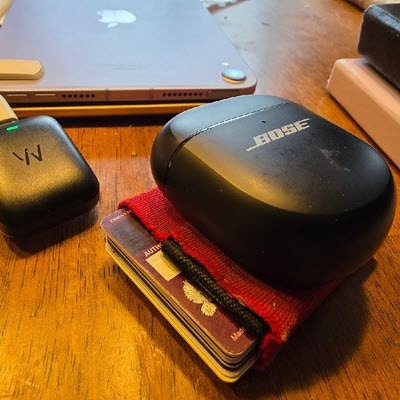
I started today thinking about a thread on Bluesky about where social audio has gone. I had a few objects in front of my at the time as I started talking out loud. My phone recorded my thoughts and after I posted the audio clip into a Bluesky thread a marvelous spontaneous threaded conversation unfolded.
I dumped the MP3 file into Fabric where my voice became a transcript. And then I copied the transcript into Copilot where I asked for a microblog-ready post. That’s what appears below.
The Early Days of Threaded Audio
There was a time when sharing audio meant sparking real, threaded conversations. Apps like Audioboo, guided by people such as Clay Lowe recently asked why so many of these services faded. The answer is simple: numbers. Growth depends on people showing up, engaging, and sticking around. Most social‑audio platforms never reached the scale needed to survive.Why Social Audio Struggled
Audioboo succeeded only after pivoting into podcasting, where venture capital and paying studio clients kept the lights on. Most social audio spaces couldn’t make that leap because people generally don’t want to pay for audio‑first social interaction. It’s hard enough to get them to click play, never mind subscribe.
Meanwhile, Meta expanded its empire. Facebook, Threads, and WhatsApp became the dominant conversation pits. When your home screen is full of algorithmic feeds, there’s little time left to listen to audio — much less create it.
Audio blogging remains an art form for people who enjoy living inside their own listening world. It’s a niche, and niches rarely attract paying users.
Why I Make Less Audio Now
People sometimes ask why I’ve reduced my audio output by more than half. The reason is simple: discovery. If I share an audio clip, most people won’t click the link. They won’t open it, and they certainly won’t play it.
But if I take the same content and put it on YouTube, the audience multiplies. Even audio‑only uploads get more traction there than through RSS feeds. The word “podcast” has been reshaped by influencers who insist it must include cameras, lighting, a studio, a crew, and hype cycles. That’s a different world entirely.
I may continue posting audio to YouTube on my Topgold account there. It reaches people in a way traditional audio blogging no longer does.
Teaching in the Era of AI
Alongside this shift, I’m focused on teaching people how to craft content and think critically in the age of AI. I try to explain what I do in under three minutes, and audio often plays a role in that process.The Power of Micro.blog
Clay used “microblogging” as a synonym for audio blogging, but there’s a richer world here — especially the one Manton Reece has built with micro.blog. . I’ve known Manton since his Basecamp engineering days, and what he’s created is thoughtful, sustainable, and grounded in the indie web.
I pay a small monthly fee because the service works for me. I can upload audio and have it appear as a playable post, or embed a Spreaker link when that works better. Text becomes the anchor for the audio, and that’s a healthier habit for me. My microblog connects into the wider Fediverse and the AT Protocol on Bluesky, which keeps the conversation flowing.
People Who Shaped This Space
I respect the work of Christian Payne (Documentally), and I often wonder what Mark Rock is doing now; he was a real luminary with the BBC and Audioboo. It’s easy to follow Manton Reece at manton.org to see what he’s writing.Looking Ahead
From my little corner of the internet, I’m convinced that social media in its current form will decline as AI advances. That deserves its own audio clip someday.
InsideView is my microblog. Topgold ie is a more esoteric space I maintain, though as a recent retiree I’m running out of money to fund all these watering holes.
Postscript
This part of the microblog post isn't produced by Fabric and Copilot. It's just a short comment to say that because of the prompt from Clay Lowe, the replies from himself, from Christian Payne and from Simon Toon, that I have discovered the AI tools inside Fabric and Copilot have enabled me to quickly spawn a way to cross-post the conversation that started as audio, dropped into Bluesky, then bounced back in various audio forms onto Bluesky, into RSS feeds, and into the microblogging universe like this short post demonstrates (complete with AI-generated keywords from the Microblog CMS.This is how connected conversations are meant to be.
And for a bonus, it's possible that an embedded iframe may display my original audio below.